The Best American Hotels Built Inside Old Factories, Cinemas, and Schools
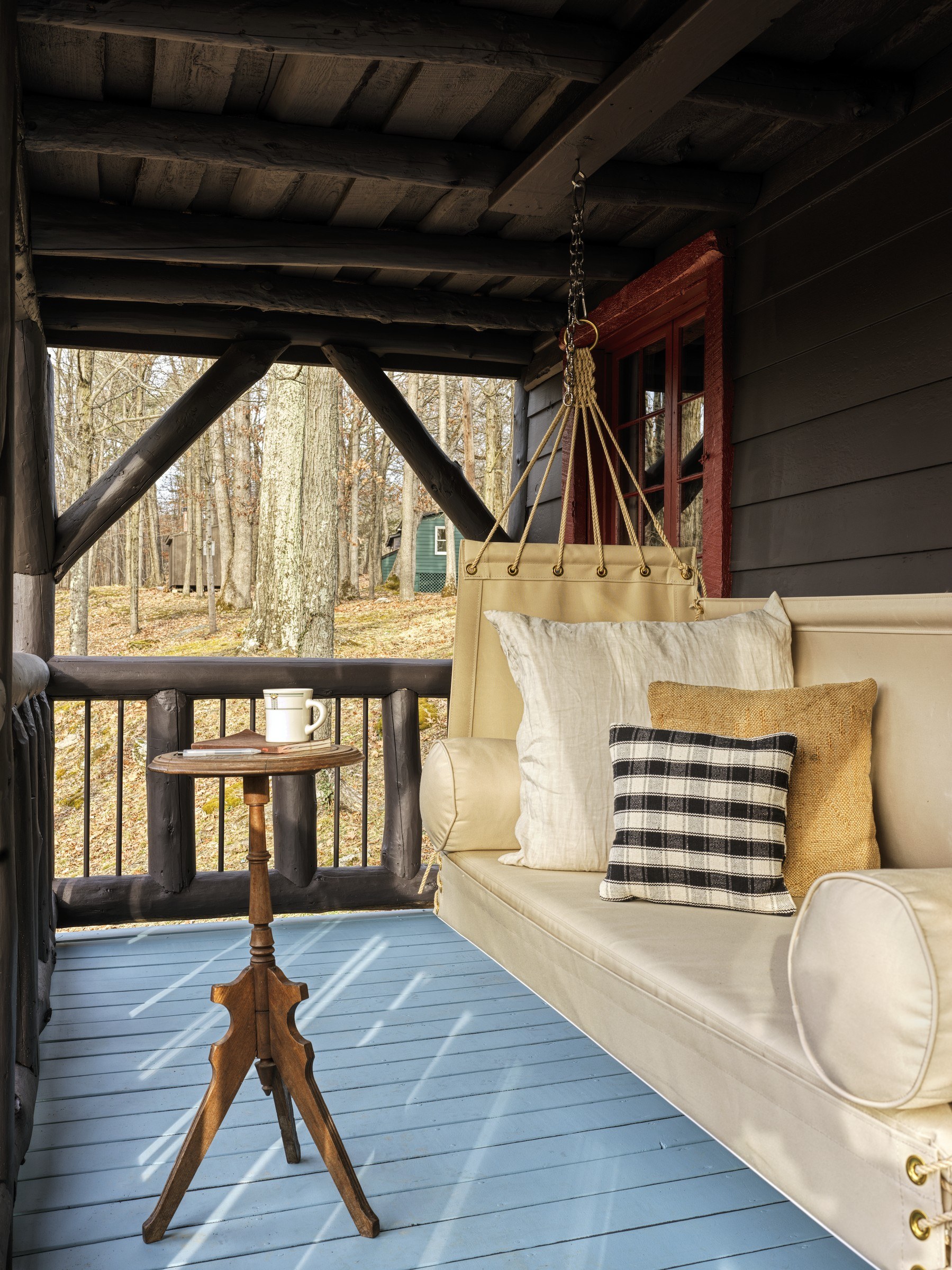
There's a pattern in our data that took a while to notice and now seems obvious: the independent hotels that score highest on design are disproportionately the ones built inside something that used to be something else. A schoolhouse. A steelworks. A fabric mill. A cinema. An airplane hangar.
New-builds can score high — Camptown does, Piaule does. But on average, the adaptive-reuse hotels beat them, and the reason isn't mysterious. The old building arrives with a story, a set of proportions, and load-bearing walls you can't move. The interesting design work is what you do inside those constraints. A blank site gives you freedom, and freedom, for a lot of hotels, produces beige.
The best of them
Washington School House — Park City, UT. An 1889 Victorian schoolhouse, twelve rooms, Forbes five-star. The tall windows and thick stone walls are the school's; everything inside is not.
The Foundry Hotel — Asheville, NC. The 1920s steelworks that made the iron for the Biltmore Estate, restored around an explicit acknowledgment of the historically Black neighborhood it sits in. Benne on Eagle for dinner.
The Society Hotel Bingen — Bingen, WA. A 1908 schoolhouse in the Columbia Gorge, converted with a ring of cabins and a Japanese-style bathhouse. A design hotel and a spa, from $235.
Hangar Hotel — Fredericksburg, TX. A WWII-era airfield hangar reimagined as fifty art-deco rooms with an Officers' Club bar and balconies onto the runway. It is exactly as much fun as it sounds.
Tourists — North Adams, MA. A 1960s motor lodge reimagined by Wilco's bassist and designer Ben Svenson into a cedar-and-steel building on the Hoosic River, a walk from MASS MoCA.
The Roundhouse — Beacon, NY. A restored fabric mill over Beacon Falls, twelve minutes from Dia:Beacon. The falls are audible from most of the rooms.
250 Main Hotel — Rockland, ME. A modernist boutique in Rockland's art district, the Farnsworth Museum across the street.
Why schoolhouses, specifically
Three of the hotels above were schools, and it's not a coincidence. A 19th-century schoolhouse is already the right shape for a small hotel: solid masonry, big windows, high ceilings, and a floor plan that's basically rooms off a hall. The bones do half the work.
Steelworks, mills, and hangars are harder — bigger volumes, industrial scale — but when they work, they really work, because nothing else feels like sleeping inside a building that used to make things.
When it doesn't work
Adaptive reuse fails the same way every time: the conversion fights the building instead of working with it. Drop-ceilings under a barrel vault. A boutique color palette smeared over industrial brick. Rooms carved out of a big volume with stud walls that don't reach the ceiling, so you hear your neighbor's TV through the gap.
The hotels above succeed because they let the original structure lead — the school's windows, the mill's timbers, the hangar's scale — and did the new work quietly around it. When a listing photo shows you a beautiful old exterior and a generic interior, that's the tell. The building deserved better.
Notes
- The full design list has more of these, plus the new-builds that keep up.
- Adaptive-reuse hotels tend to be in towns — the old building was usually somewhere central — so they score well on location too. Good for people who want to walk to dinner.
The best independent design hotels → · Or tell us what you're after →