Piaule Catskill
Architect-designed cabins on 50 acres of Catskill forest — the quietest luxury in the region.
An architectural-minimalist interior, in a contemporary new build, with a restaurant worth booking on its own. Google guests rate it 4.4★ across 217 reviews.
December through March for the mountain; late September and October for the foliage.
Very good. A genuinely good independent hotel — the sub-scores tell you if it's your kind.
We earn a small commission if you book through this link, at no cost to you. How this works
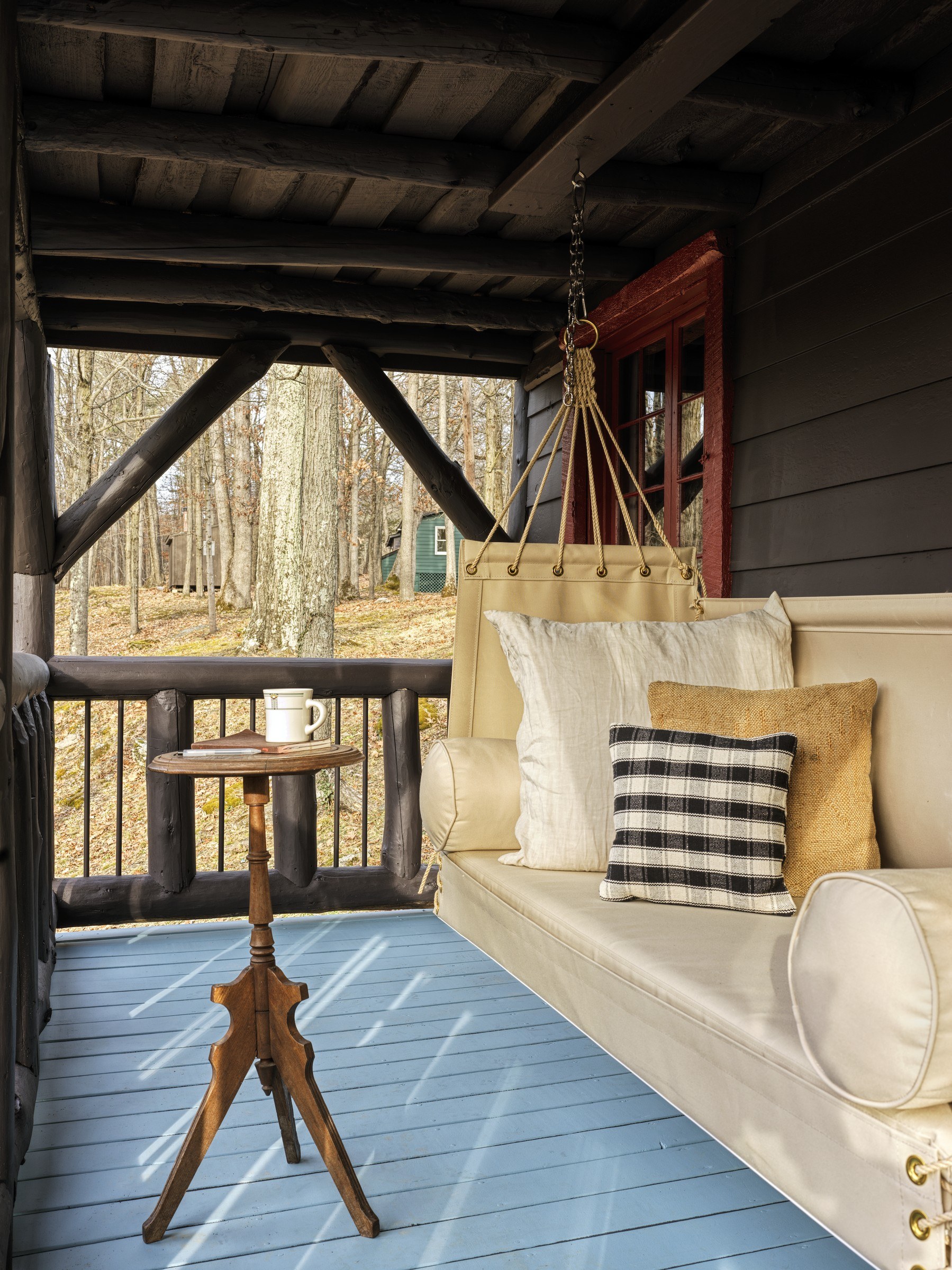
A serious architecture project disguised as a hotel. Twenty-four timber-and-glass cabins arranged across fifty acres of forest off Mossy Hill Road, each one set just out of sight of the next, each one anchored by a wall of glass that frames trees and not much else. There's a wood stove. There's a bed. There's a deep tub. That's the program.
Piaule isn't trying to charm you. It's trying to remove things from the room until what's left is the view, the silence, and the weather. The pricing assumes you understand what that's worth, and that you're not coming for the gym.
The setting
Catskill is the unglamorous half of the upper Hudson Valley — the working town across the river from Hudson, less photographed and better off for it. Piaule sits a few minutes outside the village proper, up a hill, surrounded by mature hardwoods. The drive from the Thruway exit is short but feels longer; the road narrows, the trees close in, and by the time you reach the gravel turn-off you've stopped checking your phone.
The property backs onto its own trail network and connects, in spirit if not in survey, to the broader Kaatsbaan-Olana-Hudson cultural corridor. Olana is fifteen minutes north. Kingston is half an hour south. Phoenicia and the high peaks are an hour west. Catskill itself has gotten a few good restaurants in the last few years, but you don't come to Piaule to leave Piaule.
The building
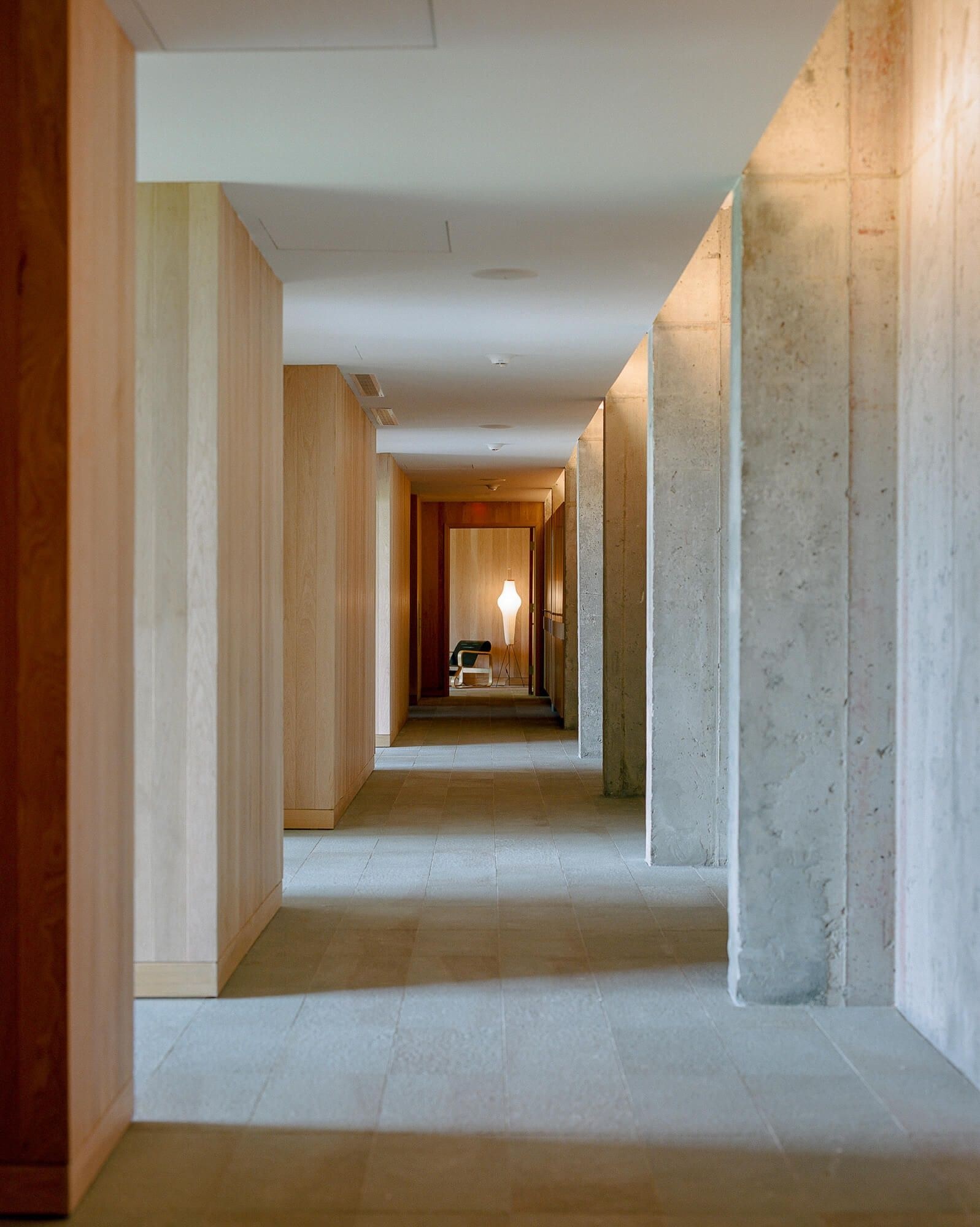
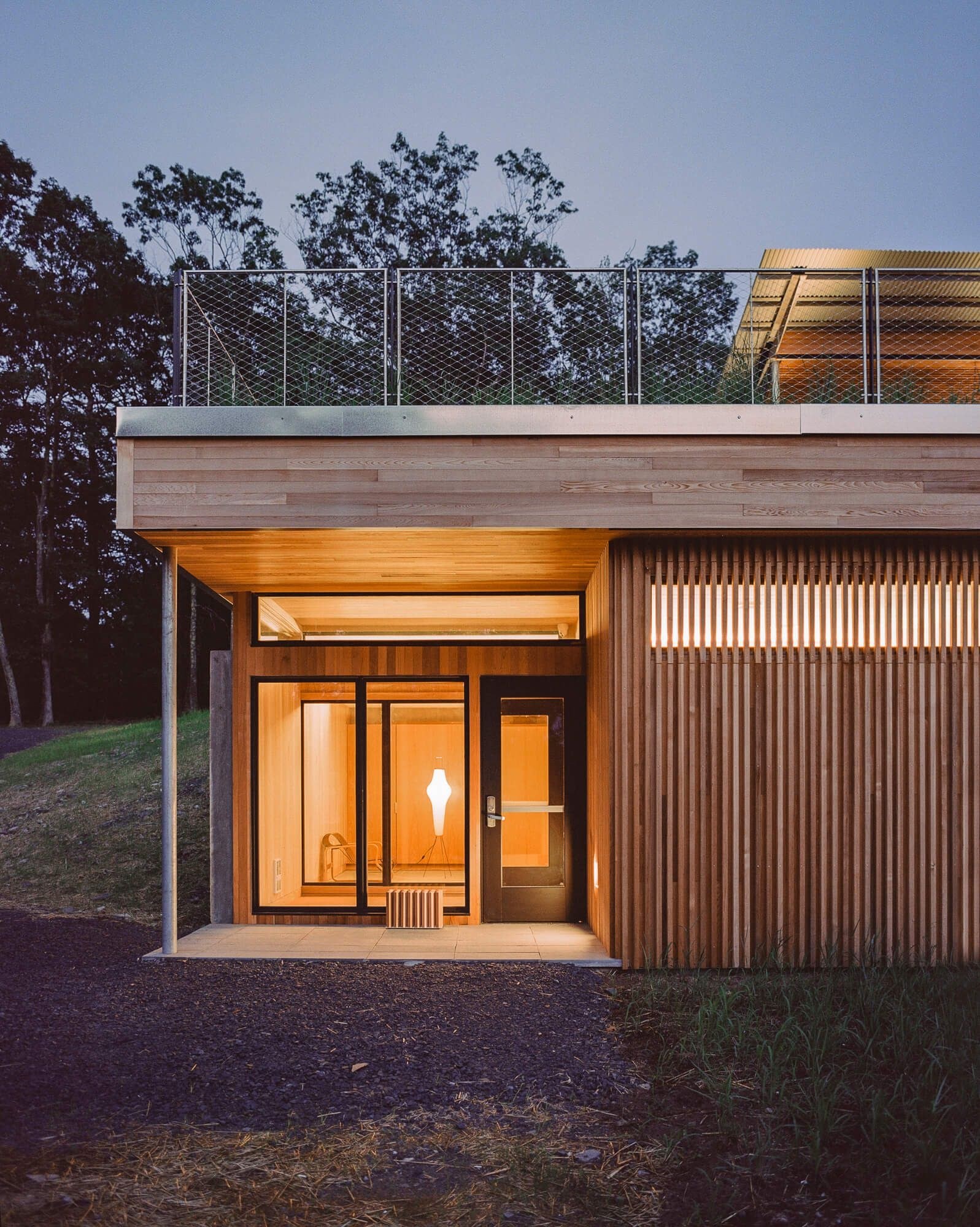
The cabins are the work of Garrison Architects — concrete-and-glass plinths topped with cedar-clad volumes, set lightly on the slope with minimal site disturbance. The materials palette is exactly three things: poured concrete, glass, and wood. No drywall theatrics, no farm-stand reclaimed-barn nostalgia. Everything is detailed at an architect-magazine level and largely left alone.
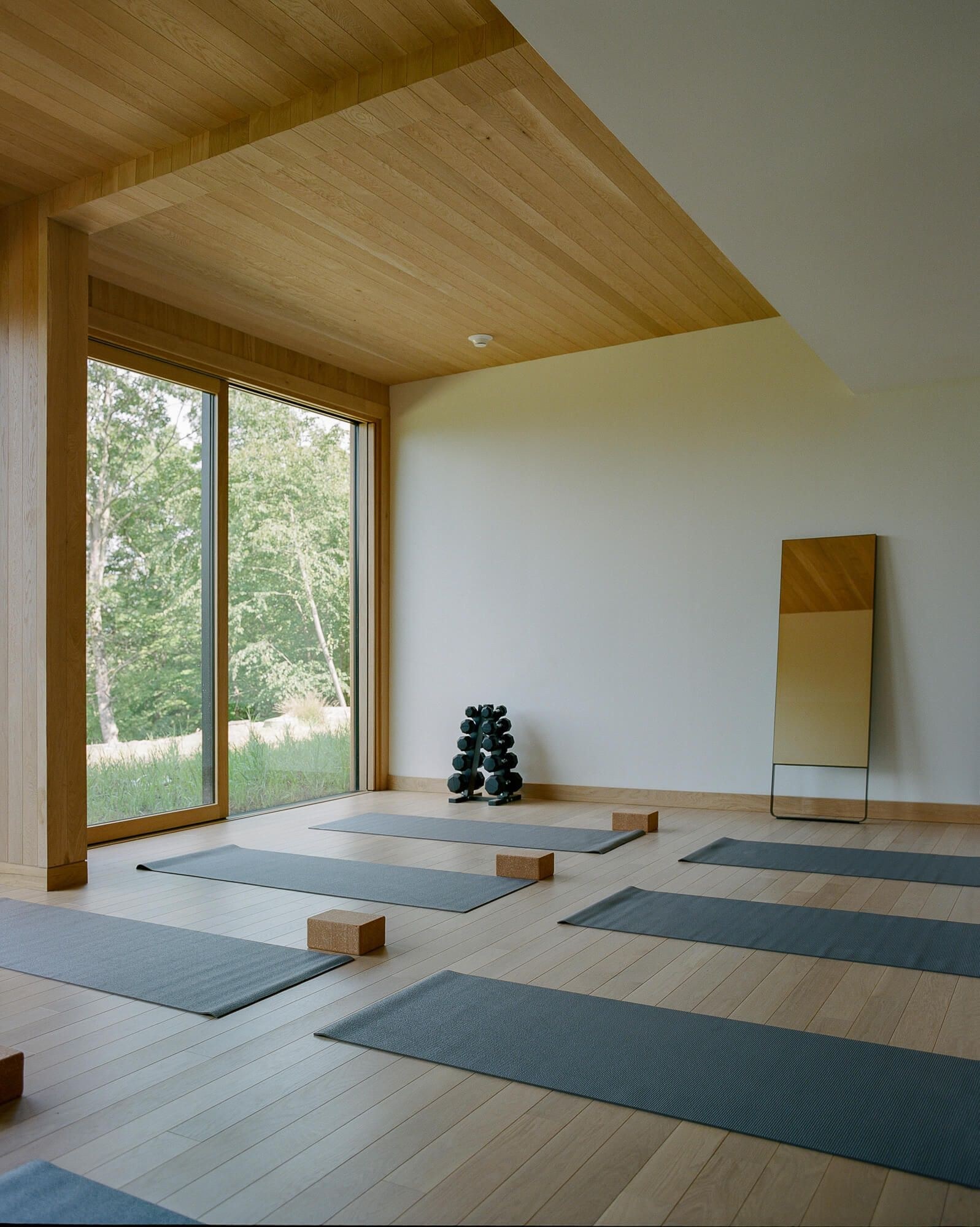
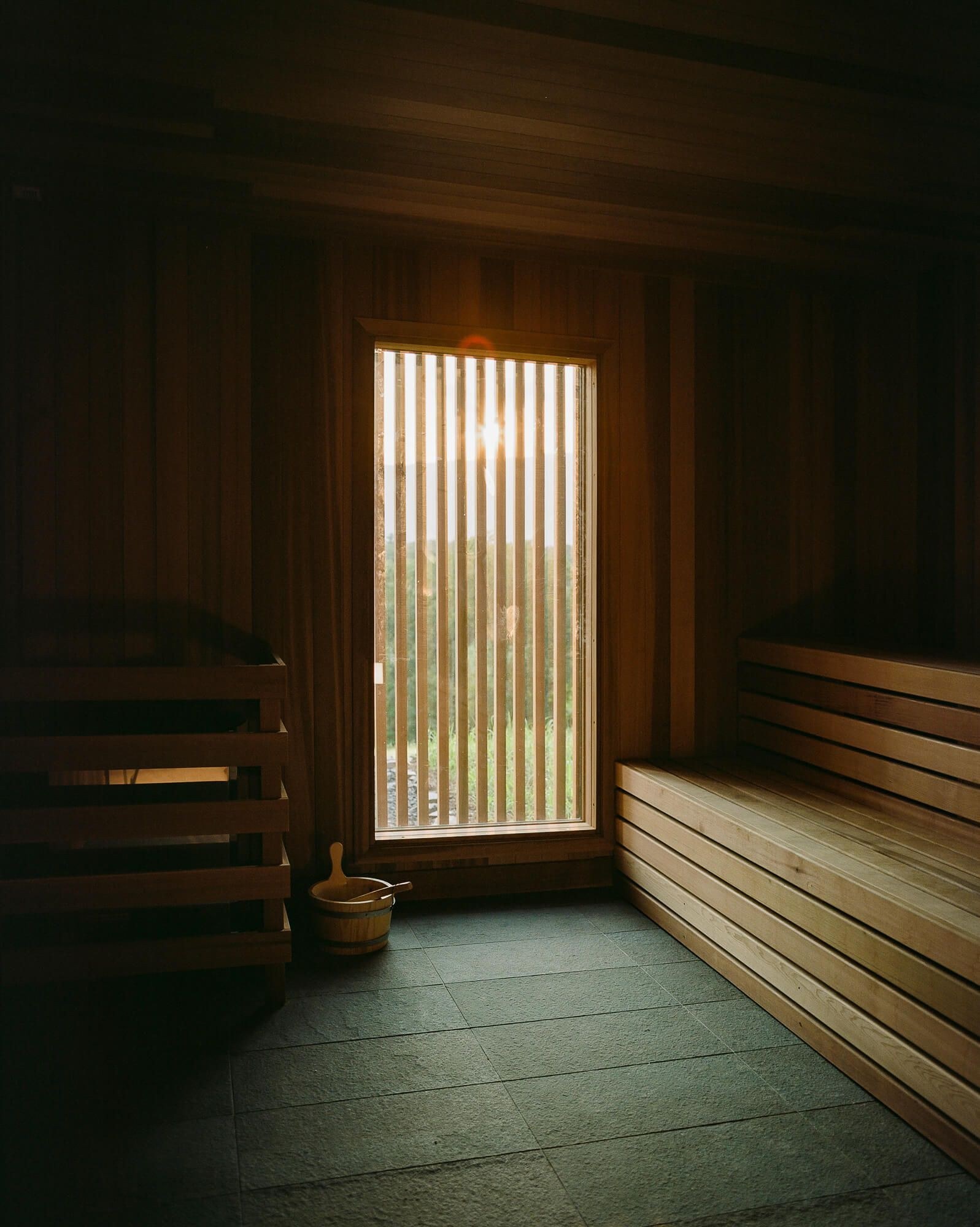
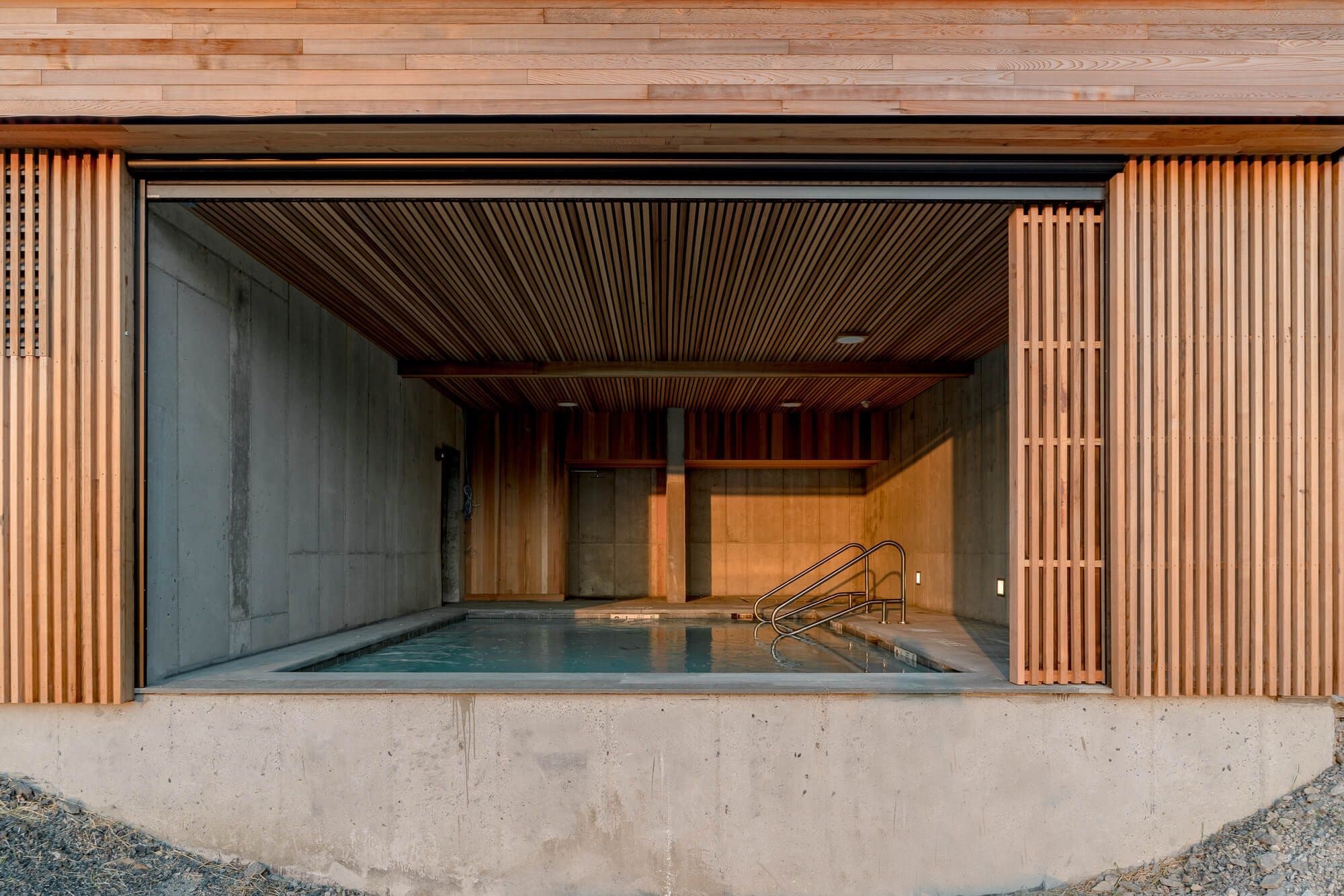
The lodge — the main building you check into and eat in — is the same vocabulary at larger scale. Long horizontal lines, a fireplace, a small bar, the spa pavilion downhill with a sauna and cold plunge looking out at the trees.
The rooms
Twenty-four standalone cabins, all roughly the same footprint and finish. A bed positioned to face the glass wall. A wood-burning stove. A soaking tub. A small kitchenette. No TV. No clutter. Linens and bath products are good without being branded at you.
There are no upgrade-tier rooms in the conventional sense — the variation is which slope, which view, how deep into the woods. Pick one further from the lodge if you want quieter; closer if you don't want to walk back from dinner in the rain.
Food & drink
The lodge restaurant is the only food on property and it's a real kitchen — a short, ingredient-driven menu that changes with what's around, served in a single room with the same architectural restraint as everywhere else. Non-guests can book, but the room is small and dinner sells out on weekends. Breakfast is included; lunch isn't a thing.
On the property
The spa pavilion is the second-most-photographed building on the property after the cabins, for good reason. A wood-fired sauna, a cold plunge, and a quiet treatment program. Wellness here is closer to a Nordic bath ritual than a hotel-spa upsell.
- Sauna and cold plunge
- Trail walks on the property
- Lodge restaurant and small bar
- Spa treatments by appointment
- Open year-round; winter is arguably the point
Who it's for
- Couples who want forty-eight quiet hours and have already done the inn-with-a-front-porch thing
- Architects, designers, and people who read Dezeen on weekends
- City refugees who specifically don't want to be entertained
- Anyone who has paid for a "cabin" before and been disappointed
Who it's not for
- Families with small kids — the cabins aren't built for it and the property isn't either
- Travelers who want a town to walk into after dinner
- Anyone who finds minimalism cold rather than calming
Nearby
Olana, Frederic Church's hilltop villa, is a fifteen-minute drive and worth the half-day. Hudson's Warren Street — restaurants, antique stores, the Basilica — is twenty minutes across the river. Kaaterskill Falls and the eastern Catskills trailheads are within forty-five minutes. For food: Lil' Deb's Oasis in Hudson, Kitty's in Hudson, and the bar at Talbott & Arding for a pre-drive snack.
An architectural-minimalist interior, in a contemporary new build, with a restaurant worth booking on its own.
A destination-nature setting rather than an in-town base.
Google guests rate it 4.4★ across 217 reviews.
A luxury rate (from about $525/night) for the room, setting and kitchen you get.
25–50 rooms, and built for stillness.
Backed by a deep guest-review record and a full Le Hotelist write-up.
How we score hotels →