Olympic Peninsula.
The Olympic Peninsula's lodging is mostly inside Olympic National Park itself — Lake Crescent Lodge (1916, family-run), Kalaloch Lodge (oceanfront cabins), Lake Quinault Lodge. Outside the park: the Resort at Port Ludlow, the James House in Port Townsend (1889 Victorian B&B), the Manresa Castle.
Kalaloch Lodge
Oceanfront cedar cabins on the Pacific — 64 units, the Olympic National Park beachfront.
Lake Crescent Lodge
Built 1916 inside Olympic National Park — 52 rooms, lakeshore cabins, stunning summer-only access.
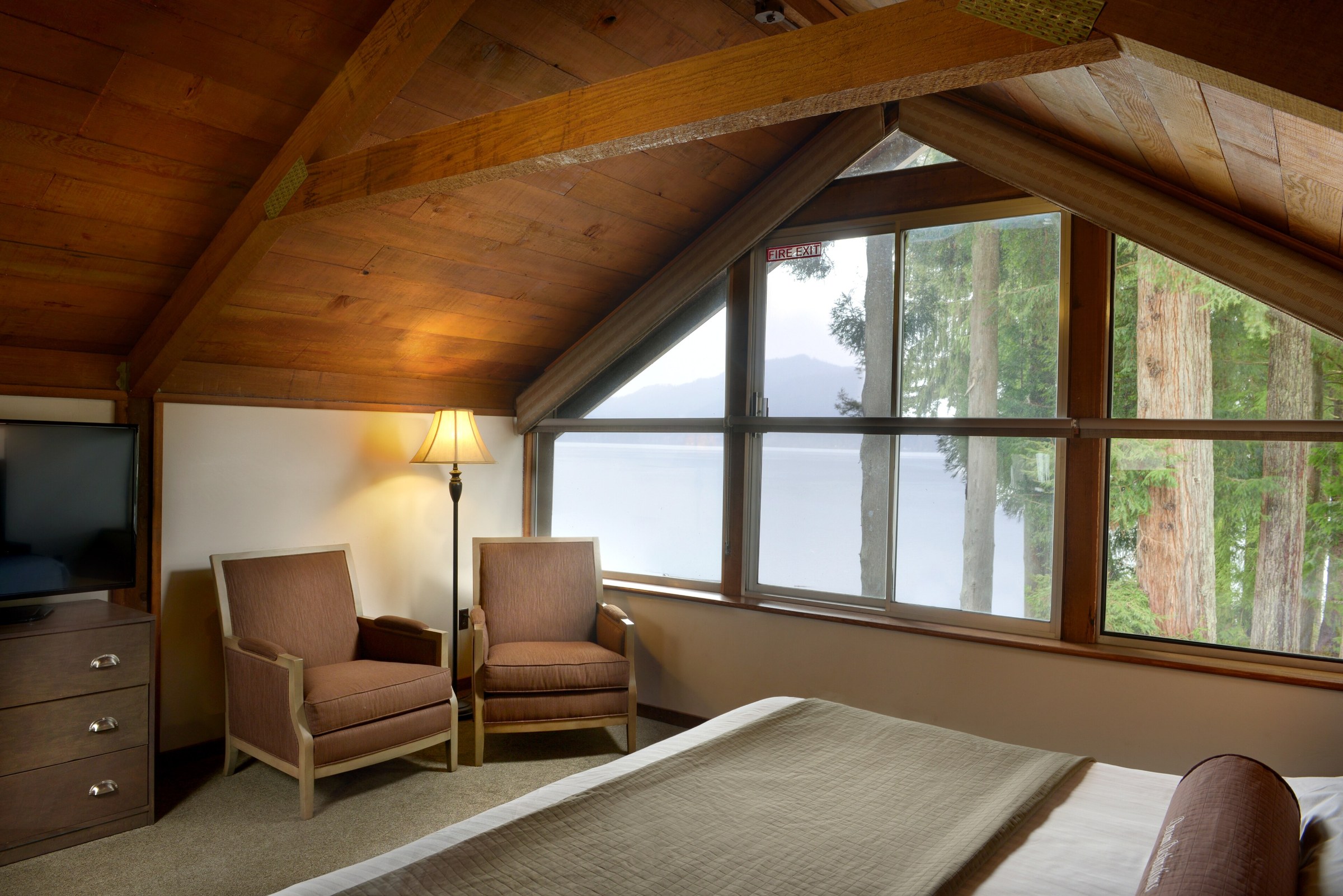
Lake Quinault Lodge
Built 1926 in the Quinault rainforest — 92 rooms, the only lodge inside the Quinault valley.
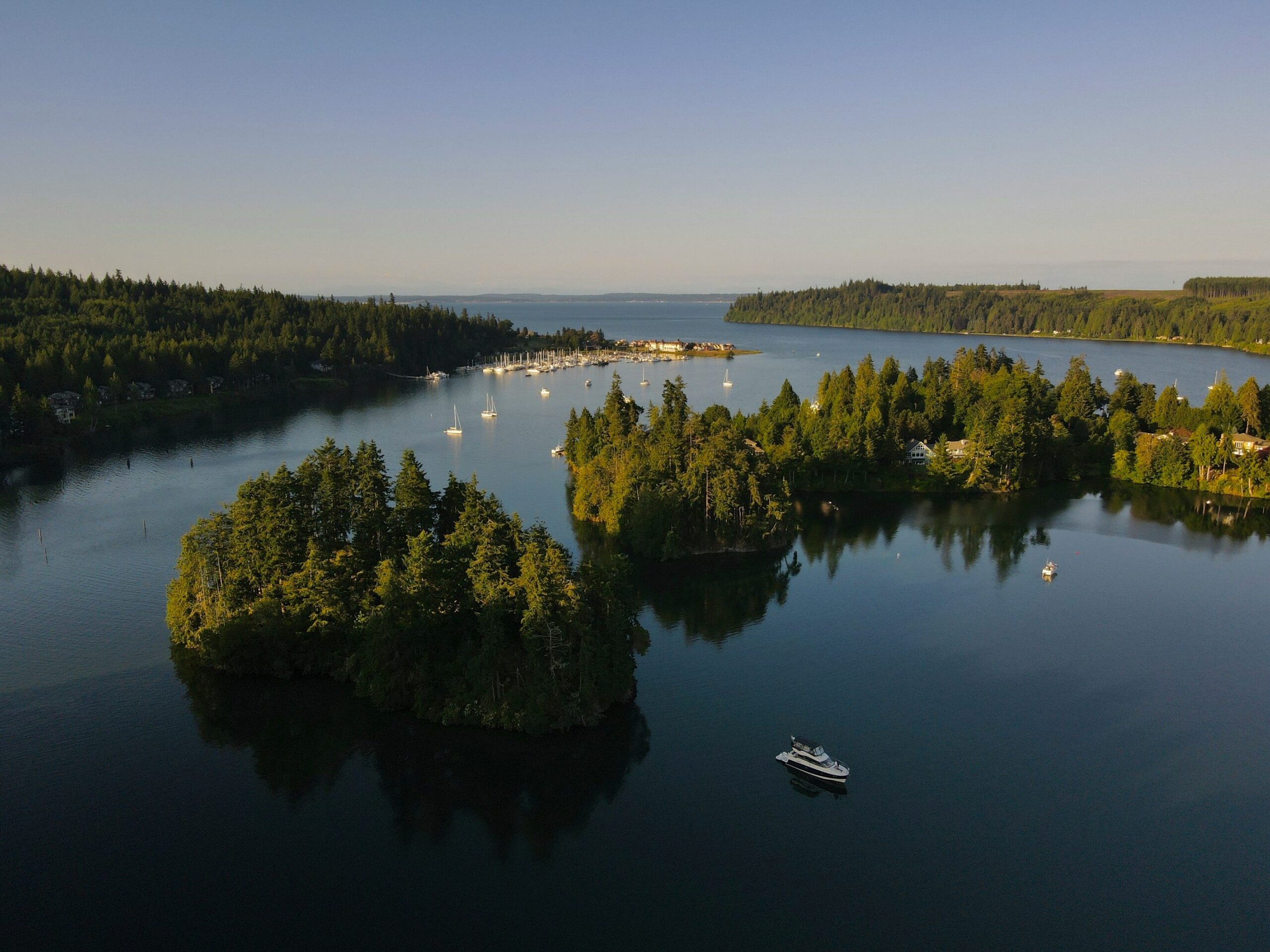
The Resort at Port Ludlow
Thirty-seven rooms on Hood Canal — a quiet alternative to the National Park lodges.
The James House
An 1889 Queen Anne mansion — 12 rooms, the first Pacific Northwest B&B, harbor views.
The Olympic Peninsula's lodging is mostly inside Olympic National Park itself — Lake Crescent Lodge (1916, family-run), Kalaloch Lodge's oceanfront cedar cabins, Lake Quinault Lodge in the rainforest. Outside the park: the Resort at Port Ludlow, the James House in Port Townsend, the handful of Victorian B&Bs on the eastern peninsula. All independent, all working.
What this looks like
The Olympic Peninsula is the thumb of land west of Seattle — Puget Sound on the east side, Pacific Ocean on the west, Olympic National Park (almost a million acres) at the center. From Seattle the route is the ferry to Bainbridge or Edmonds, then 101 — the highway loops the entire peninsula in roughly 350 miles. The four geographies that matter: the eastern Hood Canal side (Port Ludlow, Port Townsend — Victorian sea-captain town), the northern Strait of Juan de Fuca (Port Angeles — gateway to Hurricane Ridge and Lake Crescent), the western Pacific coast (Kalaloch, Ruby Beach, the Hoh Rainforest), and the southern Quinault valley. Aesthetically, peninsula lodging is craftsman, cedar-shake, river-stone, and the lodge-pole construction the 1910s NPS-era mostly built and never replaced.
The standouts
- Lake Crescent Lodge (Port Angeles) — built 1916 inside Olympic National Park, 52 rooms, lakeshore cabins. Summer-only access on the historic side.
- Kalaloch Lodge (Forks) — oceanfront cedar cabins on the Pacific, 64 units. The Olympic National Park beachfront.
- Lake Quinault Lodge — built 1926 in the Quinault rainforest, 92 rooms. The only lodge inside the Quinault valley.
- The James House (Port Townsend) — 1889 Queen Anne mansion, 12 rooms. The first B&B in the Pacific Northwest, harbor views.
- The Resort at Port Ludlow — 37 rooms on Hood Canal, a quiet alternative to the National Park lodges.
When to come / who it's for
July through September is the only safe weather window — Olympic gets 12+ feet of rain a year on the western side, and most of it falls between October and May. Hurricane Ridge opens fully in July; Lake Crescent is busiest in August; Hoh Rainforest is misty regardless. Off-season (October–April) the western lodges close or run reduced — eastern peninsula (Port Townsend, Port Ludlow) stays open year-round. The Olympic rewards a full ring road (5–7 days) — 350 miles of 101 is the actual point. It works for both couples and families; the lodges are kid-friendly by design.
Nearby
Hurricane Ridge (5,200 feet) is the easy alpine drive — wildflower meadows in July, snowshoe terrain in February. Hoh Rainforest's Hall of Mosses is a 0.8-mile loop through old-growth Sitka spruce. Ruby Beach is the most photographed Pacific stretch, 30 minutes from Kalaloch. Cape Flattery (the northwestern-most point in the Lower 48) is a 0.75-mile boardwalk on the Makah reservation. Port Townsend's downtown is 19th-century Victorian preserved nearly whole. Forks (yes, that Forks) is real, mostly a working logging town; the Twilight tourism is mostly polite.